I could go to Pompeii 12 more times and still be fascinated. It’s one of the coolest places and it is so interesting to wonder how they know everything that they know about Roman history. Between the artifacts that they found and the literature of ancient Roman scribes, we know a lot about Roman life. So here is your abridged history lesson.

In 79ad, Pompeii was a 700 year old bustling seaport and market/trading city of the Roman Empire. When Vesuvius showed signs of erupting, most of the 12,000 people fled, but about 2,000 stayed back, waiting for the storm to pass. It didn’t and when the top of the volcano collapsed into the earth, a cold of toxic gasses went through all of the cities on the mountain. Most people died of asphyxiation at this moment. Then there was the ash and debris that covered Pompeii, up to the second story of most buildings. And then the lava flow covered that. So the cities were lost until the 1700s. Interestingly enough, Ercolao (Herculaneum) was covered in lava and not ash/debris because it was closer to the eruption, so it was better preserved, with organic material even surviving there. For you angelenos, the Getty villa is a recreation of a villa in Herculaneum.
Plaster cast of a person who died in the 79AD eruption

Anyway, so we started our short exploration of Pompeii outside the city walls. As it is in Rome, the ancient city is typically lower than the rest of the city.

While the Greeks were better than the Romans at pretty much everything, especially their stone work, the Romans killed it with Concrete. When the Roman civilization died, so did this technology, until modern times. So Pompeii was built primarily out of stone and concrete, but most walls were covered with plaster or marble, depending on the importance of the building.
Frescoes inside a Roman Domus (House)
All of these walls would have been covered with plaster or stone
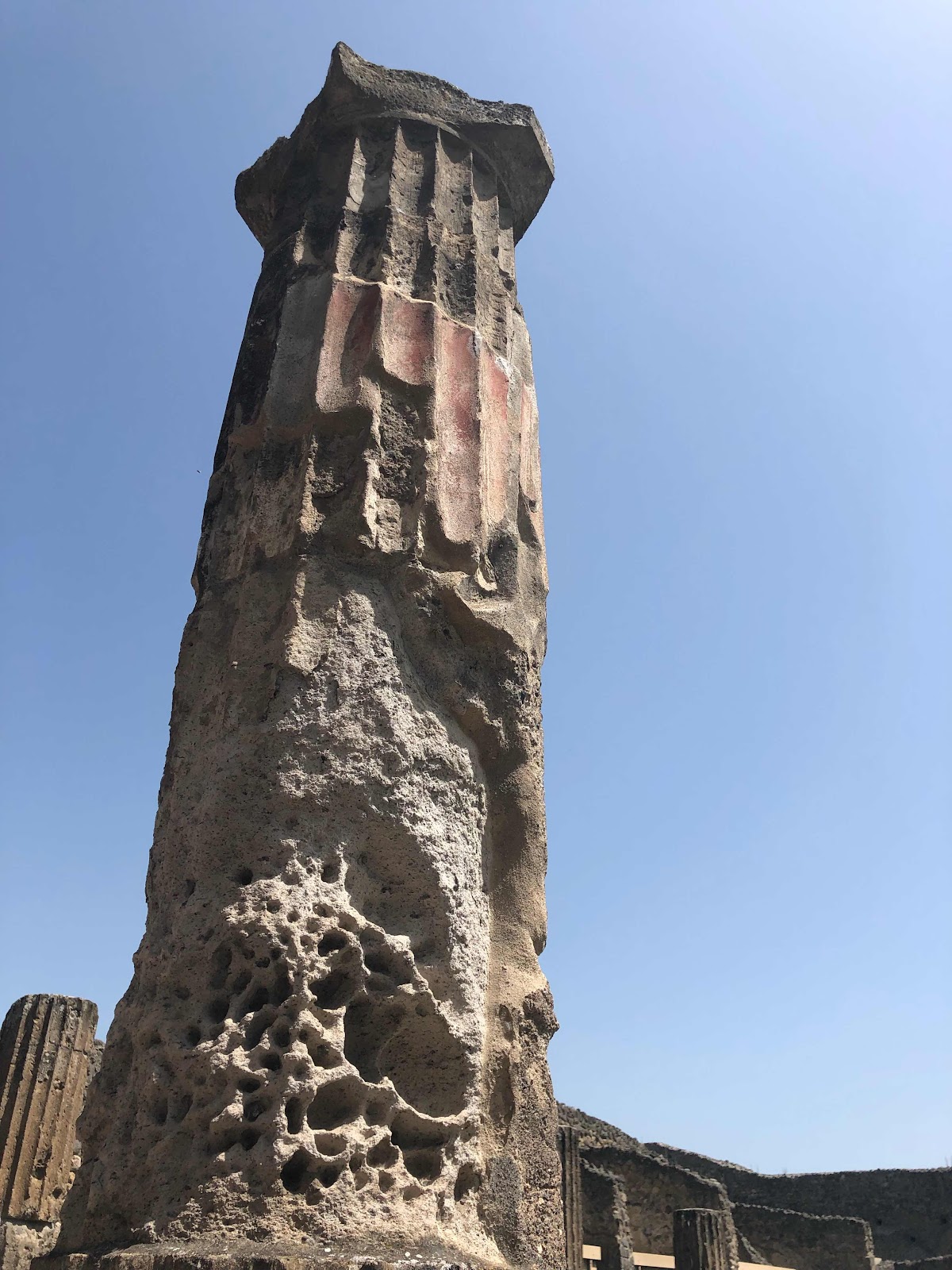


Penises everywhere! A sign of good luck
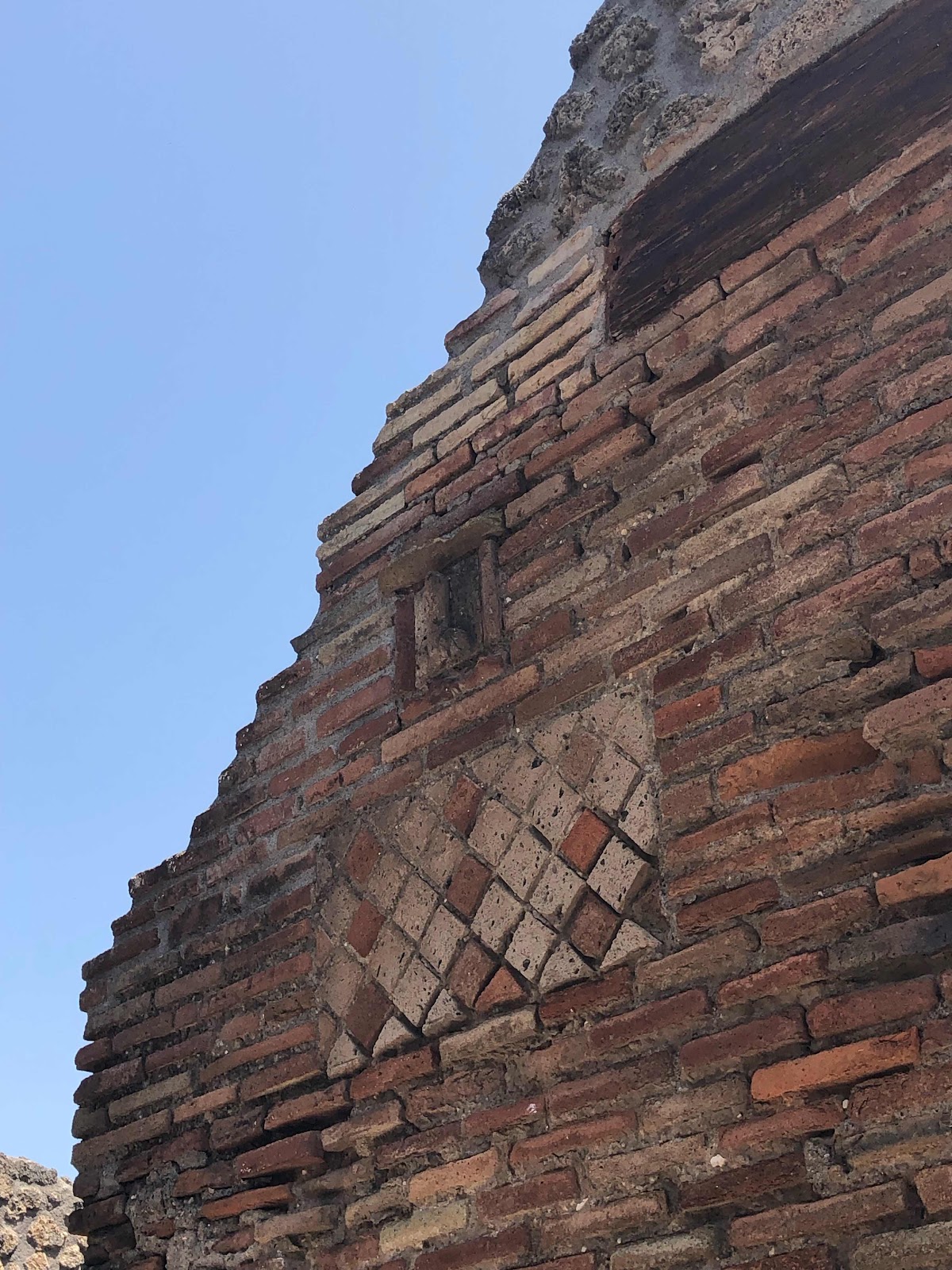
Most of the buildings were 2 stories tall, but the second story collapsed in the eruption. Interestingly enough, a few barrel vaulted roofs survived, which I would guess is because of their structural value. The Etruscans started using the arch but the Romans perfected it.
Shrine in a Roman Domus (house)

There was no sewer system so the streets were just running rivers of waste, which is why the sidewalks and “crosswalks” were elevated. There are still ruts in the stone from the chariots rolling through the streets. Sometimes chariots from other towns wouldn’t fit between the crosswalk stones so they had to “rent” Pompeii chariots for the city. There was fresh water available via an aqueduct engineered by the Romans across the whole city, as that was a right provided to everyone who lived there, from slaves to politicians.


Freshwater fountain at an intersection
The baths were pretty advanced for the time, with a tepidarium (tepid) and calidarium (hot) chamber. The chambers had double walls and the calidarium was adjacent to a furnace powered by slaves. So the hot water would run through the walls and make the chamber super hot. The flutes in the barrel vaulted ceiling helped the condensate drain down the walls. Roman doctors recommended bathing once a day so it was a popular place in the Roman city.
Ceiling of the calidarium

And finally, the brothel. With frescoes of the “menu”, the brother was a series of rooms with concrete beds (and mattresses) where female slaves would be offered by a pimp. They would make the equivalent of 2 glasses of wine per day, and there was graffiti on the walls as a sort of yelp review of the prostitutes. These ladies used condoms made of animal intestine but their life expectancy was still only about 20 years.
Menu of services available

Roman graffiti


After our trip to Pompeii we headed to Luna del Vesuvio, a winery on the mountain, known for its fertile and porous soil. We had an awesome meal with five wine pairings from the vineyard (including scialiatielli pasta of course) and locally grown olive oil as well.
My beautiful mama en route to lunch

Goat cheese and jam made with a mixture of wine and onions (yes, and it was delicious!)


Arcangelo gave us a tour of the vineyards and showed us Filippo, the donkey he races. I have to share a link of him racing. I had no idea donkey racing was a thing.


We took the train to Roma and here we are at our last stop!!


No comments:
Post a Comment